







Three questions posed to Professor Olivier Corten, Professor at ULB and member of the JURDI Scientific Council
Israel's responsibility
Can the violence perpetrated by settlers, although committed by private individuals, engage the responsibility of the State of Israel as an occupying power?
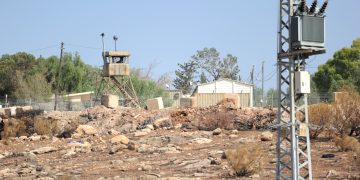
As the occupying power, Israel has a responsibility to ensure the security of the population in the Occupied Palestinian Territory. This obligation was reiterated by the International Court of Justice in advisory opinions issued in 2024 and 2025. The Court emphasized that customary law, as expressed in the 1907 Hague Regulations, protects natural resources, private property, physical integrity, and the lives of the population in the occupied territories. Israel therefore has an obligation not only to respect these rights but also to ensure they are respected. The fact that private individuals (in this case, settlers) are violating these rights cannot absolve the State of its responsibility. The advisory opinion issued by the International Court of Justice in 2024 further specifies that Israel has an obligation «to evacuate all settlers from the Occupied Palestinian Territory» and, more generally, to withdraw entirely from this Territory as soon as possible. By failing to do so, and by allowing them to continue and deepen what the Court describes as a ’de facto annexation« of these territories, Israel is seriously violating several peremptory norms of international law.
The obligations of third countries
What obligations does the advisory opinion of the International Court of Justice of July 2024 impose on other States in the face of colonization and the violence that accompanies it?
In its advisory opinion, the Court concluded that «all States are under an obligation not to recognize as lawful the situation arising from the unlawful presence of the State of Israel in the Occupied Palestinian Territory and not to provide aid or assistance in maintaining the situation created by the continued presence of the State of Israel in the Occupied Palestinian Territory.» This obligation derives generally from customary international law (codified in the work of the International Law Commission on State Responsibility, which the UN General Assembly took note of in 2001) as well as from conventional international humanitarian law (with the obligation to respect and ensure respect for the 1949 Geneva Conventions, reiterated in Article 1 common to the four conventions). States cannot therefore consider themselves exempt from all obligations simply because they do not participate directly in the colonization and abuses committed against the populations of the occupied territories. They cannot «lend aid or assistance» to the maintenance of this situation, which implies not only not supporting Israel but also adopting measures to end the serious violations of international law for which this State is responsible.
Sanctions and means of action of France and the European Union
Can states legally adopt sanctions, or even countermeasures, against Israel? Are individual sanctions targeting certain settlers sufficient in light of their international obligations?
States can, and indeed must, adopt all appropriate measures, provided these remain consistent with international law. First and foremost, this includes suspending the Association Agreement between the EU and Israel, which explicitly provides for this possibility in the event of human rights violations. By failing to do so, the EU and its Member States are explicitly choosing to remain «associated» with a state that is seriously violating the most fundamental norms of international law. Beyond the European framework, states can and must act individually, ensuring that no support (especially, but not exclusively, military) is maintained, by public authorities as well as by private actors over whom they exercise jurisdiction, for the continuation of these violations. It is in this context that we must consider regulating the import of products from Israel, or investments made in that country, always ensuring that nothing acknowledges or encourages the continuation of the occupation. Sanctions can, in exceptional cases, take the form of «countermeasures,» meaning the temporary suspension of international obligations benefiting Israel (in trade matters, for example), as long as Israel fails to fulfill its own obligations. And, of course, sanctions can also target individuals through criminal proceedings, including for acts committed abroad. Here again, it is simply a matter of implementing an obligation to prevent or punish international crimes, an obligation accepted in numerous conventions and based on a customary principle of universal scope. In short, one might be inclined to consider that all the measures and sanctions directed against Russia to end the occupation and abuses committed in Ukraine could be transposed (with the necessary adaptations) to the situation of the Israeli occupation of Palestine.
Press contact
| Farah Safi, President of the Scientific Council of JURDI
contact@jurdi.fr |