


Three years after the start of Israel's operations to completely destroy the Gaza Strip, in "retaliation" for the Hamas attack of October 7, 2023—an attack that experts and various United Nations bodies have described as genocide—the responsibility for handling information raises entirely legitimate questions. When it comes to explaining to the world what is happening in Gaza, many observers have the impression that directives are shared among numerous newsrooms of major media outlets, particularly in the West. The narrative of the Israeli authorities is reproduced in whole or in part; doubt is cast on any information coming directly from people living in Gaza, as well as on information from invited experts when they use certain legal terms; and the suffering of the Palestinian civilian population is minimized through carefully chosen language.
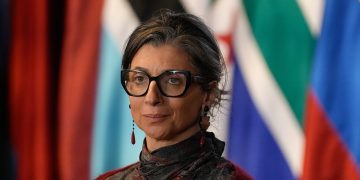
The very particular way in which various international news agencies and various media outlets, both national and international, "« inform »"The world is thus the subject of the analysis delivered to us by the Special Rapporteur on the occupied Palestinian territory, Francesca Albanese, in her report entitled "The truth under the rubble: the media at the time of genocide" which will be presented on October 26, 2026 before the United Nations General Assembly.
The report focuses on three specific aspects: the elimination of Palestinian journalists, the control of information in Israel through censorship and propaganda, and the automatic reproduction by Western media and digital platforms of the Israeli narrative that legitimizes crimes committed in Gaza. According to the Special Rapporteur, this attack on the truth could constitute «mediacidosis.».
Summary of the main ideas of the report
This report highlights the process of dehumanizing Palestinian victims perpetrated by countless newsrooms around the world. Its main objective is to demonstrate that the truth has become a target (https://blogs.mediapart.fr/juristes-pour-le-respect-du-droit-international/blog/050626/cibler-les-journalistes-commettre-un-crime-pour-en-dissimuler-tShe explains the reasons for this targeting: the destruction of truth contributes to the destruction of the Palestinian people. Indeed, the elimination of witnesses, especially the most reliable among them—that is, journalists—as well as the protection of those responsible through manipulative media narratives, serves the intentions of the perpetrators of genocide, who have every interest in controlling the narrative and information surrounding their crimes.
The first practice highlighted in the report and considered a means of facilitating genocide is the targeting of journalists. Indeed, it is worth recalling that we are currently facing the deadliest conflict in history for journalists in Gaza. The Special Rapporteur takes the time to reiterate the figures: nearly 300 journalists killed, including approximately 70 killed in reprisal for their professional activities, and more than 400 wounded. The Israeli argument for justifying these crimes is always the same: they label them "combatants" or "terrorists." Yet, as we know, under international law, a journalist remains a civilian, and it cannot be justified to target, kill, or torture them without first proving their participation in hostilities. The situation is all the more alarming because journalists often lose not only their own lives, but also the lives of their children or spouses. The case of Al Jazeera journalist Wael Al-Dahdoud is quite telling in this regard.
As for the second practice denounced in the report, it is Israel's control of the narrative. In Israel, censorship has become the norm. Independent media outlets are sanctioned and branded as traitors to the nation, as is the case with the prestigious newspaper Haaretz—and as is the case today with the filmmakers of the film Naza. Furthermore, the foreign press is banned in Gaza, and Israel funds campaigns on X and YouTube to manipulate information for Western audiences. Moreover, some Israeli media outlets incite genocide: Palestinians are called "Amalek," "cancer," or "cannibals" who "must be eradicated.".
Finally, regarding the responsibility of Western media, the report relies, among other things, on 62 contributions analyzing Western media outlets—including, of course, French media. The report reveals leaked internal guidelines at The New York Times urging caution in the use of terms like "genocide," "ethnic cleansing," and "occupied territory." Similarly, it recommends avoiding the word "Palestine." Furthermore, the report denounces the dissemination of fake news by some media outlets without any verification. Examples abound: "beheaded babies," UNRWA infiltrated, and so on. In addition to this lack of professionalism in investigative and fact-checking work, the report emphasizes the danger of adopting the Israeli argument justifying the killing of civilians and indiscriminate attacks. The dehumanizing language and the use of the expression "human shields" are documented, demonstrating the responsibility of Western media in the trivialization of genocide. This is all the more reprehensible given that, faced with the spread of fake news and genocidal vocabulary, the media are ignoring, or almost ignoring, the work of the UN, the ICJ or the ICC, and discrediting the work of the experts or judges of these organizations.
In conclusion
This new report by Francesca Albanese challenges the media and journalism professions in many parts of the world. It demonstrates the essential role of the media in minimizing, or even encouraging, the ongoing genocide in Gaza. The study uses as an example the vocabulary employed by the media on the day of the massacre that killed Hind Rajab's family, as well as Hind herself and the paramedics who were trying to save her. The BBC, for instance, ran the headline: "Hind Rajab found dead.".
According to Albanese, all these processes contribute to what she calls "mediacidus." The destruction of evidence and witnesses is part of the genocidal act. It is therefore incumbent upon the media to "stop whitewashing propaganda by giving it a journalistic veneer." A word to the wise…
The report: some excerpts
The full text of this report A/81/249 is available online (https://documents.un.org/doc/undoc/gen/n26/187/20/pdf/n2618720.pdf).
Paragraphs 14-15 of this report state:
14. From In October 2023, Israeli forces killed nearly 300 journalists and wounded more than 400. While some were killed in indiscriminate attacks on civilian areas, approximately 70 were killed in reprisals for their professional activities. Many were wearing press vests and helmets, carrying equipment, or were in clearly marked vehicles and tents, which, rather than allowing the Israeli army to identify and protect media professionals, made it easier for them to be targeted.
15. Israel justifies targeting journalists by portraying them as combatants. Under international humanitarian law, journalists only lose the protection afforded to civilians if they directly participate in hostilities, and the burden of proof rests with the aggressor; there is a presumption of civilian status. Neither affiliation, nor professional status, nor opinions expressed reach the threshold of participation in hostilities. Israel reverses this norm, labeling journalists as «terrorists» or ’Hamas agents«—often posthumously and based on undisclosed or discredited evidence—in order to legitimize unlawful killings.
We also read in paragraphs 39-41:
“ 39. Telecommunications infrastructure is considered civilian infrastructure under international humanitarian law, and Israel's generic argument that connectivity serves Hamas's interests cannot refute this presumption or satisfy the conditions required to justify an attack on civilian property. These attacks on telecommunications infrastructure and workers therefore constitute unlawful attacks against civilians and civilian objects. By repeatedly disrupting communications, Israel inevitably isolates the civilian population, hindering access to vital information, attack alerts, and emergency services, while also violating the public's right to seek and receive information.
40. Journalists seek alternative means of communication during communication blackouts: they use foreign eSIM cards or connect to Egyptian or Israeli networks, which are only accessible in certain areas—mainly near the borders—while also being prohibitively expensive and prone to frequent overload. When they use these networks, they expose their location, increasing the risk of attack.
41. The assassinations of identified journalists, attacks targeting their homes and families, and the destruction of media and telecommunications infrastructure presumed to be civilian constitute war crimes, namely deliberate killings and intentional attacks against civilians and civilian objects. Deliberately targeting the relatives of journalists to prevent the dissemination of information also constitutes prohibited collective punishment and a form of intimidation against protected persons. These acts are part of a widespread and systematic attack directed against the civilian population of Gaza. In this context, the assassinations of journalists and their persecution because of their perceived political opinions constitute murder and persecution amounting to crimes against humanity. However, analyzing these acts solely through the lens of war crimes and crimes against humanity would provide an incomplete picture of the situation. In the context of the ongoing genocide, the systematic elimination of media witnesses and the destruction of documentation constitute evidence of genocidal intent. These acts reveal a desire not only to destroy a protected group, but also to eliminate the conditions that would allow for the observation, documentation, preservation, and ultimately, prosecution of this destruction.
Paragraph 66, which should be of interest to some newsrooms in Europe, as well as some journalists' associations and unions, reads as follows:
“66. Access breeds influence. Content analysis shows that Western media outlets draw heavily on Israeli sources, with Israeli officials and lobbying groups enjoying privileged access to media executives, particularly at the BBC. Internal editorial guidelines reveal how this influence manifests itself in practice. The BBC's editorial handbook, for example, excludes Gaza from the list of occupied territories and adopts the Israeli government's preferred description of the West Bank and Gaza as "disputed" territories, without specifying that this violates international law. The BBC also makes the misleading claim that "outposts are not settlements" and are "very different" because they are not authorized by the Israeli government and "overrule" it. Yet, successive Israeli governments have protected and retroactively legalized illegal outposts, thereby expanding illegal settlement activity. Similarly, leaked New York Times guidelines recommend caution in using terms such as «genocide,» «ethnic cleansing,» and «occupied territory,» and instruct journalists to use the term «Palestine» only «in very rare cases.»
Paragraph 72 finally explains that:
“72. When certain facts could no longer be denied or «covered up,» the media often omitted or downplayed Israel’s responsibility. A content analysis revealed that the BBC did so in 83 of the relevant headlines and the New York Times in 65. A striking example is the killing of Hind Rajab by Israeli forces, which the BBC continues to present under the headline: «Hind Rajab, 6, found dead in Gaza days after calling for help.».
The report's recommendations (paragraphs 94-99) are unequivocal, and conclude by clearly stating that:
“99. Journalist organizations, civil society, and the general public should defend those who denounce atrocities, demand accountability from those responsible, and continue to draw attention to the plight of detained and disappeared journalists; they should never forget that journalism ceases to fulfill its public service mission when it merely relays the claims of those in power instead of scrutinizing them.
View the full document